Why Some Arizona Self-Defense Claims Fail Even When Force Was Legal
Claiming self-defense is not an automatic get-out-of-jail-free card. Arizona’s stand-your-ground laws can potentially be abused, which is why prosecutors often look closely at the evidence to determine the reasonableness and proportionality of a person’s use of force.
Defendants claiming self-defense should understand that prosecutors, investigators, and jurors may not interpret the events the same way they do.
Why People Are Sometimes Arrested Even When They Claim Self-Defense
Police officers responding to a violent incident are usually arriving after the confrontation has already happened. They may encounter conflicting witness statements, incomplete evidence, visible injuries, emotional participants, or uncertainty about who escalated the situation first.
Officers do not need to determine beyond a reasonable doubt that someone acted unlawfully before making an arrest. In many situations, they only need probable cause to believe a crime may have occurred.
As a result, people who believe they acted lawfully in self-defense are often arrested while investigators and prosecutors sort through the evidence.
This is especially common in situations involving:
- Road rage incidents
- Bar fights or parking lot altercations
- Domestic violence allegations
- Neighbor disputes
- Cases involving firearms or allegations of threatening behavior
In many situations, both parties involved in the confrontation accuse the other person of being the aggressor.
Self-Defense Cases Often Depend on Perception
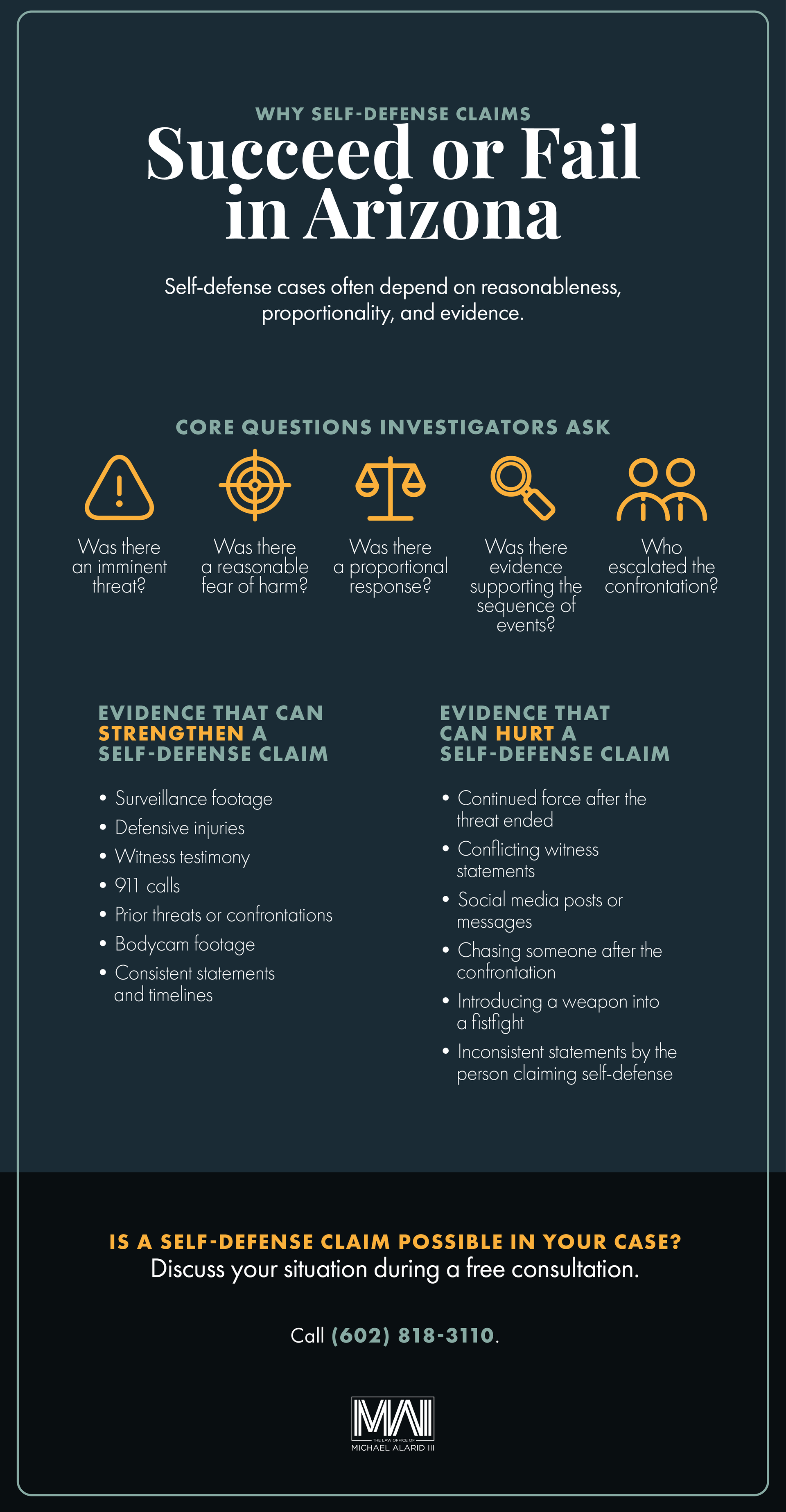
Many self-defense cases revolve around what a “reasonable person” would have believed in the same situation. Prosecutors may argue that the perceived threat was exaggerated, that the force used was excessive, or that the danger had already passed before force was used.
Split-second decisions made during a stressful encounter may later be analyzed in detail through surveillance footage, witness testimony, body camera recordings, or forensic evidence.
Jurors evaluate events with the benefit of hindsight, long after the confrontation is over. A person who felt threatened in the moment may later face questions about whether that fear appeared objectively reasonable based on the available evidence.
Proportionality Is More Complicated Than Many People Realize
Self-defense cases are not always as simple as determining whether the other person had a weapon. Prosecutors and jurors may evaluate the totality of the circumstances when deciding whether force appeared proportional to the threat.
Factors that may become important include:
- Differences in size, age, or physical ability
- Whether multiple people were involved
- Whether the confrontation continued after the threat ended
- Whether someone chased the other person after the incident
- Whether a weapon was introduced into a fistfight or verbal confrontation
There are situations where an unarmed threat may still create a reasonable fear of serious injury. On the other hand, force that initially appeared defensive may later be viewed differently if the confrontation escalated or continued after the immediate danger passed.
Evidence Often Determines How a Self-Defense Claim Is Viewed
In many violent crime investigations, evidence becomes just as important as the self-defense claim itself. Investigators and prosecutors may analyze:
- Surveillance footage
- Body camera footage
- 911 recordings
- Witness statements
- Text messages and social media activity
- Medical records and injury patterns
- Timeline reconstruction and location data
Law enforcement often investigates self-defense incidents thoroughly, which may include seeking warrants for private communications or phone data.
The evidence may support or undermine key claims, such as:
- Who escalated the confrontation first
- Whether the threat appeared imminent
- Whether force continued after the danger had passed
- Whether witness accounts match the physical evidence
Sometimes a single video, text message, or witness statement dramatically changes how prosecutors evaluate a case.
Early Statements Can Complicate a Self-Defense Case
People involved in violent confrontations are often operating under stress, adrenaline, fear, or confusion immediately afterward. That can affect memory, communication, and emotional reactions.
In some situations, a person may:
- Struggle to recall details accurately
- Exaggerate aspects of the confrontation
- Make emotional statements
- Apologize despite believing they acted lawfully
- Provide details that later conflict with physical evidence or witness accounts
Those issues do not automatically invalidate a self-defense claim, but prosecutors may still use inconsistent or emotional statements to challenge credibility later in the case.
Self-Defense Cases in Phoenix Often Become Disputes Over Evidence and Credibility
If you are facing violent crime allegations involving a self-defense claim, contact Arizona Board-Certified Criminal Defense Attorney Michael Alarid III at (602) 818-3110 for a free case evaluation.
Practice Areas
RECENT NEWS