How Do Officers Score Field Sobriety Tests in Arizona and How Can They Be Challenged?
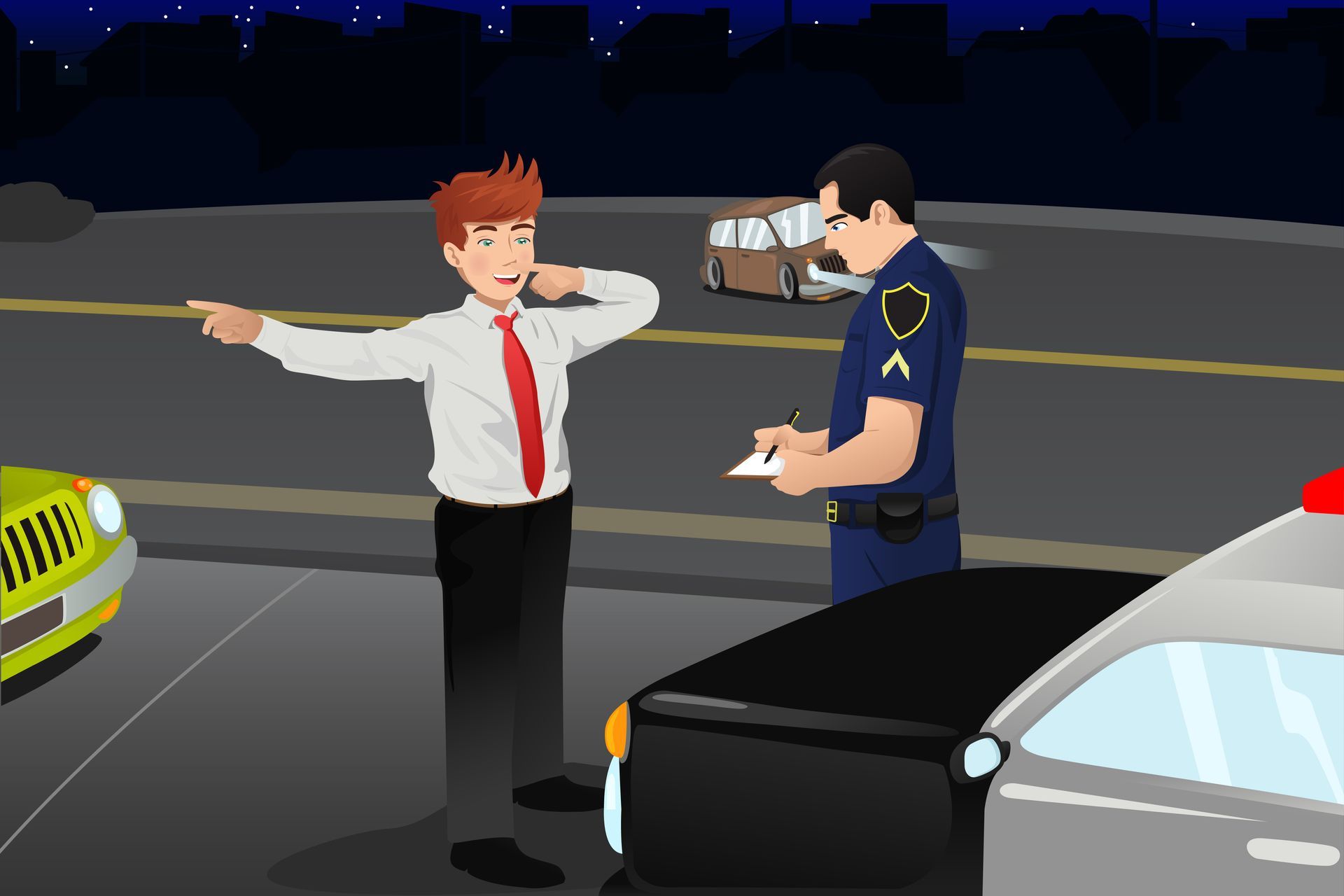
Phoenix Police and other law enforcement agencies throughout Maricopa County use three standardized field sobriety tests (FSTs) to help establish probable cause for a DUI arrest. These tests are not designed to measure blood alcohol concentration, and unlike evidentiary breath and blood tests, drivers can refuse to participate in FSTs without violating Arizona’s implied consent law.
Horizontal Gaze Nystagmus (HGN)
The Horizontal Gaze Nystagmus test measures involuntary jerking of the eyes, called nystagmus, while a person follows a moving object. During a traffic stop, that object (the ‘stimulus’) is typically a pen or small flashlight.
Before beginning, the officer is supposed to check for equal pupil size and equal tracking. The object is then held approximately 12 to 15 inches from the subject’s face, slightly above eye level, and moved in a specific, standardized way.
Each step of the process must be done according to strict rules, including moving the object at specific speeds and pausing at defined intervals.
HGN administration errors are easy to make, like moving the stimulus too quickly or failing to hold it at the appropriate distance from the driver’s face.
How It Is Scored
Officers are trained to look for three specific signs in each eye, for a total of six possible clues. If four or more of those signs are observed, the test is generally treated as an indication of impairment.
In Arizona courts, the HGN test is often given more weight than the other field sobriety tests because it is considered a scientifically recognized indicator of alcohol impairment when properly performed.
However, the test must be administered according to specific procedures and timing guidelines. Even small deviations from those standards can affect the reliability of the results.
Walk-and-Turn
The Walk-and-Turn test is a divided attention exercise designed to assess balance, coordination, and the ability to follow instructions at the same time. During a DUI stop, the officer may ask the driver to take nine heel-to-toe steps along a straight line, turn in a specific manner, and take nine steps back.
Before the walking portion begins, the officer is supposed to provide clear verbal instructions and demonstrate how the test should be performed, including:
- Keeping their arms at their sides
- Looking at their feet
- Counting each step out loud
- Not beginning until told to do so
Officers are trained to look for specific mistakes that allegedly indicate intoxication, such as stepping off the line, missing heel-to-toe contact, starting too soon, using arms for balance, or turning improperly.
There are many ways in which the walk-and-turn test can be challenged:
- Even sober drivers make mistakes due to anxiety and the stress of the situation
- Instructions are inherently complicated and hard to understand
- Even minor environmental inconsistencies can make the test difficult to perform, including uneven surfaces or poor lighting
- Many people have poor balance, even when they are not intoxicated
How It Is Scored
Officers are trained to look for several specific signs during this test, such as losing balance, stepping off the line, missing heel-to-toe contact, or turning incorrectly. If two or more of these signs are observed, the test is generally treated as an indication of impairment.
One-Leg Stand
During this test, the driver is instructed to raise one foot approximately six inches off the ground and count out loud until told to stop, usually for about 30 seconds.
Before the test begins, the officer is supposed to clearly explain and demonstrate how the test should be performed. The driver must keep their arms at their sides, look at the raised foot, and count in a specific format while maintaining balance.
Like the Walk-and-Turn, performance on the One-Leg Stand can be affected by surface conditions, footwear, age, prior injuries, fatigue, or nervousness during the stop.
How It Is Scored
During this test, officers look for signs such as swaying, using arms for balance, hopping, or putting a foot down before being told to stop. If two or more of these signs are observed, the test is generally treated as an indication of impairment.
Can Officers Use These Tests in Drug Cases?
Yes, despite these tests being validated specifically for alcohol impairment, officers in Arizona routinely use the same standardized field sobriety tests in suspected drug DUI investigations.
There is no specific scoring system that correlates performance on these tests to a particular drug concentration.
How Field Sobriety Tests Are Challenged
Challenges to FST results often come in several forms:
- These tests are all performed on the side of the road under less-than-ideal conditions
- Performance can be affected by many factors that have nothing to do with alcohol or drugs
- Administration of each method is complicated, and a minor mistake on the part of officers can invalidate the results
Improper Instructions or Administration
The reliability of results can be questioned if an officer does not give clear instructions or does not strictly follow FST training guidelines.
Roadside Conditions
Uneven pavement, gravel, sloped surfaces, poor lighting, traffic noise, and weather can all affect balance and coordination.
Medical or Physical Factors
Age, weight, prior injuries, inner ear conditions, fatigue, anxiety, or nervousness can influence performance on balance and coordination tests.
Even sober people in good physical condition who have no pre-existing health issues can make mistakes during a high-pressure testing situation, especially when they know how much is riding on their performance.
Video Evidence
Body-worn camera and dashcam footage are often reviewed to compare what is written in the report to what actually occurred during the testing.
Because field sobriety tests are used to help establish probable cause, weaknesses in how they were administered or scored can affect how the arrest is evaluated later.
What Happens Next If Field Sobriety Tests Lead to Arrest
Michael Alarid III is one of only two lawyers in Arizona who is board certified in criminal law by the State Bar of Arizona and board-certified in DUI defense by the National College for DUI Defense (NCDD).
He has an in-depth understanding of field sobriety tests, their limitations, and the mistakes law enforcement often make in their administration.
If probable cause for your arrest was based on the outcome of field sobriety tests, call the Law Office of Michael Alarid III at (602) 818-3110 for a free case evaluation.
Practice Areas
RECENT NEWS