
What Happens During a Sentencing Hearing?
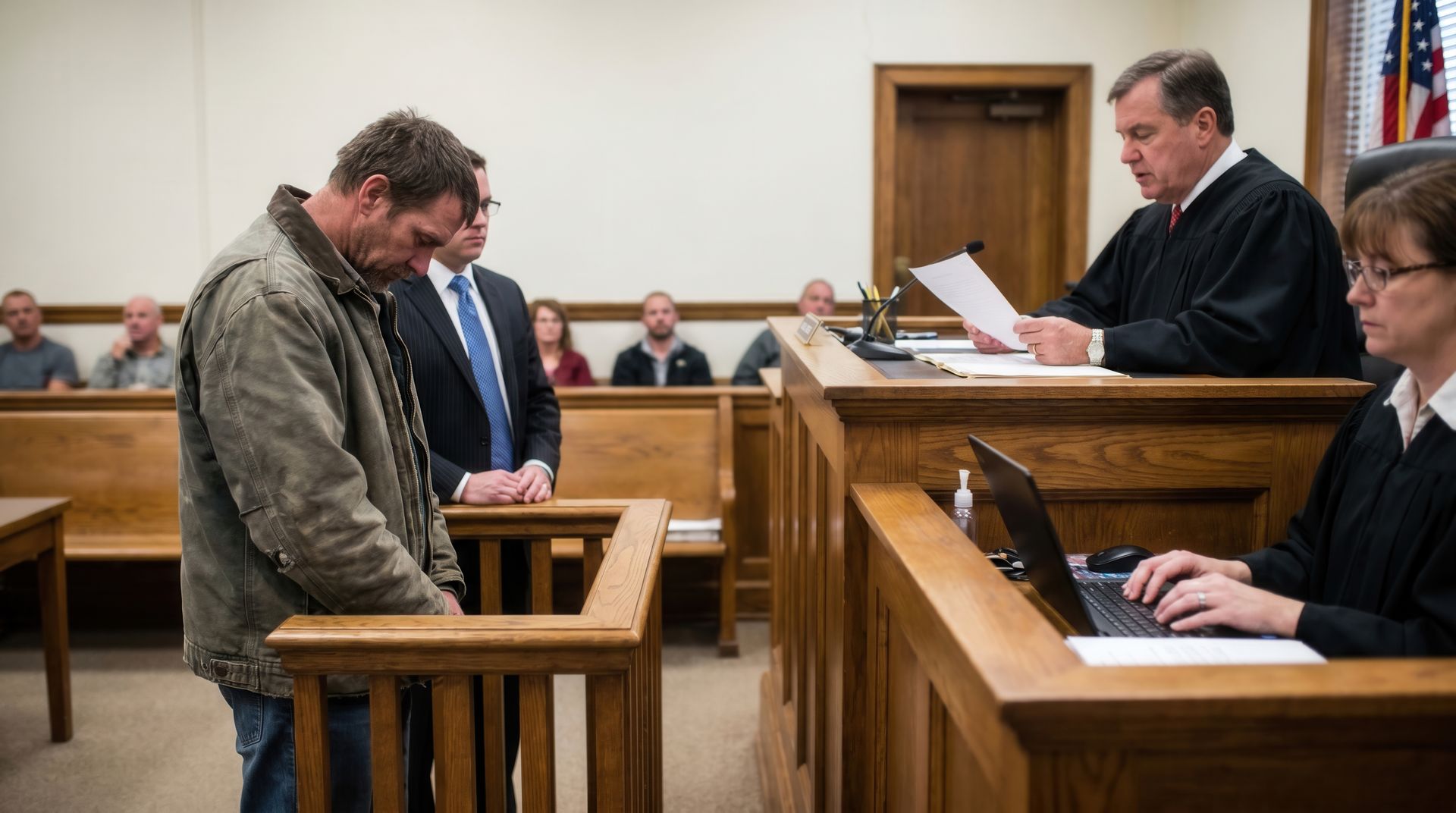
A sentencing hearing is the court proceeding where a judge formally determines and imposes a defendant’s sentence. While many people associate sentencing hearings with guilty verdicts at trial, they can occur in several different situations.
Even when both sides have negotiated a resolution, the case will often proceed to a sentencing hearing where the court formally imposes the sentence or applies the terms of the plea agreement.
How Do Criminal Cases Reach a Sentencing Hearing?
- Conviction at Trial: If a defendant is found guilty by a judge or jury, the court will typically schedule a sentencing hearing to determine the appropriate penalty based on the charges, evidence presented during the case, and Arizona sentencing laws.
- Plea Agreements: Many sentencing hearings occur after a defendant accepts a plea agreement. Depending on the terms, the agreement may contain a specific sentence negotiated by both sides or establish a range of possible outcomes while leaving some discretion to the judge.
- Open Pleas: Less commonly, a defendant may plead guilty without a negotiated agreement with the prosecution. In these situations, the court generally has greater discretion when determining the appropriate sentence.
What Happens Before the Sentencing Hearing?
The court may review a variety of information before sentencing. Depending on the circumstances, this can include:
- The facts of the offense
- The defendant’s criminal history
- Victim impact statements or submissions
- Information about employment, education, or family circumstances
- Treatment or counseling records
- Letters submitted on the defendant’s behalf
In some cases, a presentence report may also be prepared to provide the judge with additional background information before the hearing.
This stage allows both the prosecution and defense to present information they believe is relevant to the court’s sentencing decision.
What Happens During the Hearing?
While every case is different, sentencing hearings generally follow a similar structure.
- The judge will first call the case and review any relevant reports, filings, or recommendations.
- The prosecutor may then address the court and explain the sentence they believe is appropriate. The
defense attorney will also have an opportunity to speak and present arguments on the defendant’s behalf.
- Victims or, in some cases, their family members may also be permitted to address the court regarding the impact of the offense. These statements may be presented in person during the hearing or submitted to the court in writing.
- In many cases, defendants are also given an opportunity to address the judge directly before sentencing. Some defendants choose to express remorse, explain personal circumstances, discuss rehabilitation efforts, or simply ask the court for leniency.
- Once the court has heard from the parties and reviewed the relevant information, the judge will impose the sentence or explain how the plea agreement will be applied.
Does the Judge Always Decide the Sentence?
Not necessarily.
Some plea agreements contain specific sentencing terms that both parties have negotiated. In those situations, the judge may have limited discretion if the agreement is accepted.
Other plea agreements leave certain decisions up to the court. For example, the judge may need to decide where a sentence falls within a particular range or whether probation is appropriate under the circumstances.
The amount of discretion available often depends on the charges involved, the terms of the plea agreement, and Arizona sentencing laws.
What Happens After Sentencing?
Once the sentence is imposed, the defendant must comply with the court’s order.
Depending on the case, that may involve probation, fines, treatment programs, community service, jail, or prison. Some defendants begin serving their sentence immediately, while others may receive instructions regarding future reporting dates or probation requirements.
Preparing for a Sentencing Hearing in Phoenix
If you are facing criminal charges in Arizona, working with an experienced criminal defense attorney early in the process can help ensure that every stage of your case, including sentencing, is approached strategically. Arizona Board-Certified Criminal Defense Specialist Michael Alarid III represents clients throughout the Phoenix area and is available for a free case evaluation at (602) 818-3110.
Practice Areas
RECENT NEWS