What Happens When a Witness Changes Their Story?

TV and movies often make it seem as if any change in a witness’s story is disastrous for their credibility and the prosecution’s case. In real criminal cases, changing statements are not always that disruptive.
In some situations, a witness provides a statement to police shortly after an incident and later remembers additional details. In others, a witness may contradict earlier statements, recant allegations, or give testimony that differs from what was previously reported.
What those changes mean for the accused depends on the nature of the inconsistency, the witness involved, and the other evidence in the case.
Why Do Witness Statements Change?
There are many reasons why a witness's account may change over time, including:
- Memory naturally fades as weeks or months pass after an event.
- Stress, fear, or trauma may affect how a person remembers what happened.
- A witness may later recall details they did not initially mention.
- New information from other people may influence a witness's recollection.
- Misunderstandings or communication errors may be corrected later.
- In some situations, a witness may intentionally provide inaccurate information.
Not every inconsistency means someone is lying. Human memory is imperfect, and even honest witnesses sometimes remember events differently over time.
Does a Changed Story Mean the Case Falls Apart?
Not necessarily.
Courts understand that witness statements are rarely identical every time they are repeated. Minor differences are common and often expected. A witness who can’t remember whether an event happened at 8:00 p.m. or 8:30 p.m., for example, may still be viewed as generally credible.
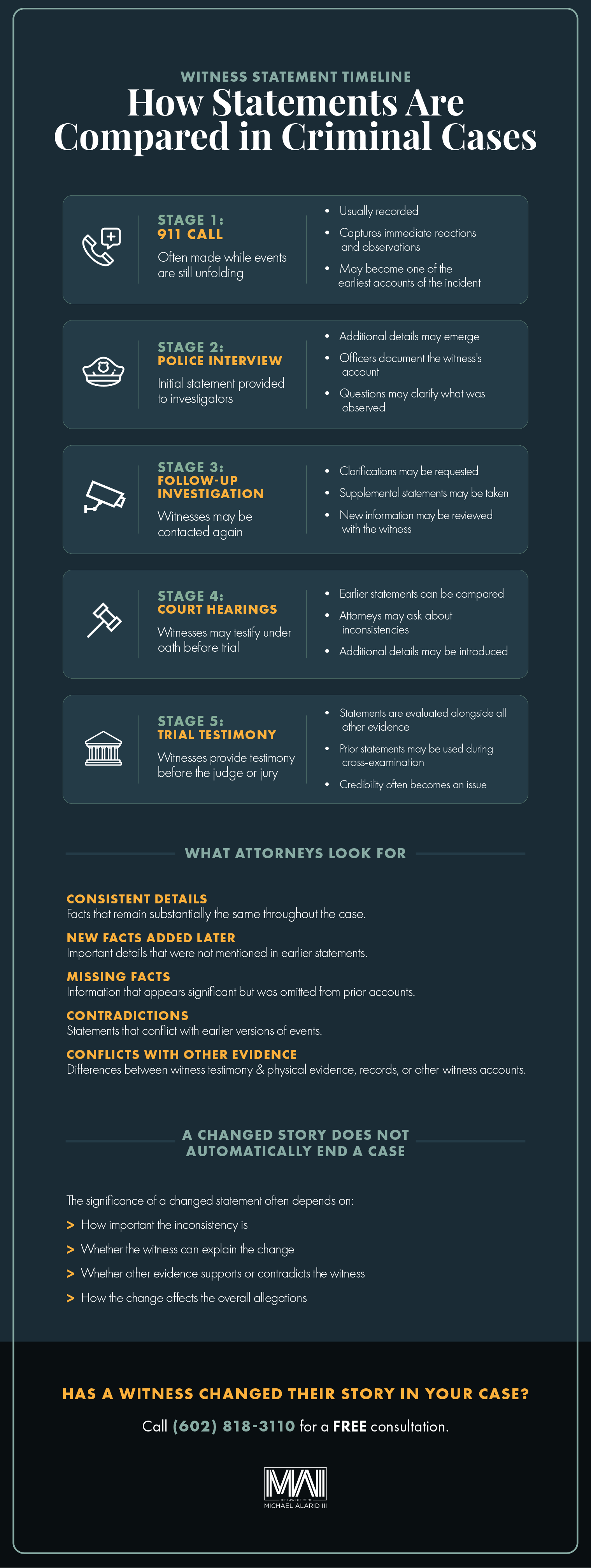
However, significant contradictions can raise important questions. If a witness changes key details about who was involved, what occurred, or how an incident unfolded, those inconsistencies may become a major issue during the case.
The importance of a changed statement often depends on whether the inconsistency involves a minor detail or a fact that is central to the allegations.
What Statements Can Be Compared?
Witnesses may give statements at several points during an investigation and criminal case. Investigators and attorneys may compare:
- 911 calls made immediately after an incident
- Statements documented in police reports
- Audio or video interviews conducted by investigators
- Text messages, emails, or social media communications
- Testimony given during hearings
- Testimony presented at trial
Because statements are often documented in multiple ways, inconsistencies can sometimes be identified months after the original allegation was made.
What If a Witness's Story Doesn't Match Other Evidence?
Witness testimony is rarely evaluated on its own. Instead, it is usually considered alongside the other evidence gathered during the investigation, such as:
- Surveillance footage
- Photographs
- Medical records
- Cell phone data
- Physical evidence
- Statements from other witnesses
In some cases, outside evidence may support a witness's version of events. In others, it may reveal inconsistencies that raise questions about accuracy or reliability.
When a witness's account conflicts with objective evidence, that conflict may become an important issue for the defense to investigate and present.
How Defense Attorneys Use Prior Statements
When witness statements differ, defense attorneys may carefully examine the changes and compare them against earlier accounts.
This can include:
- Highlighting contradictions between different statements
- Comparing testimony to police reports or recorded interviews
- Identifying important details that appeared later but were not mentioned initially
- Exploring whether outside influences affected the witness's account
- Examining whether the witness has a personal, financial, or legal interest in the outcome of the case
- Challenging the reliability of testimony through cross-examination
The goal is not simply to show that a witness made a mistake. Instead, the defense may seek to determine whether the testimony can be relied upon when important facts are disputed.
What Happens When a Witness Recants?
A recantation occurs when a witness later withdraws or changes an earlier accusation. A recantation can seriously weaken the prosecution’s case, especially when the case depends heavily on that witness’s statements. However, it does not automatically cause criminal charges to be dismissed.
Prosecutors may still rely on earlier statements, recordings, physical evidence, or testimony from other witnesses. In some situations, prosecutors may argue that the original statement was truthful and that the recantation occurred because of outside pressure, fear, or reluctance to participate in the case.
Whether a recantation significantly affects the case depends on the facts involved and the other evidence available.
Can Charges Be Dismissed Because a Witness Changed Their Story?
Sometimes a significant inconsistency can weaken the prosecution's case. Other times, prosecutors may have enough additional evidence to continue moving forward despite conflicting statements.
Every situation is different. The impact of a changed statement depends on the nature of the inconsistency, the credibility of the witness, and the strength of the other evidence involved.
If you are facing criminal charges in Phoenix and witness testimony plays a major role in the allegations, Arizona Board-Certified Criminal Defense Specialist Michael Alarid III can evaluate the evidence, identify weaknesses in the prosecution's case, and explain your legal options. Call (602) 818-3110 for a free consultation.
Practice Areas
RECENT NEWS