When Evidence From a Search Warrant Can Be Suppressed in Arizona
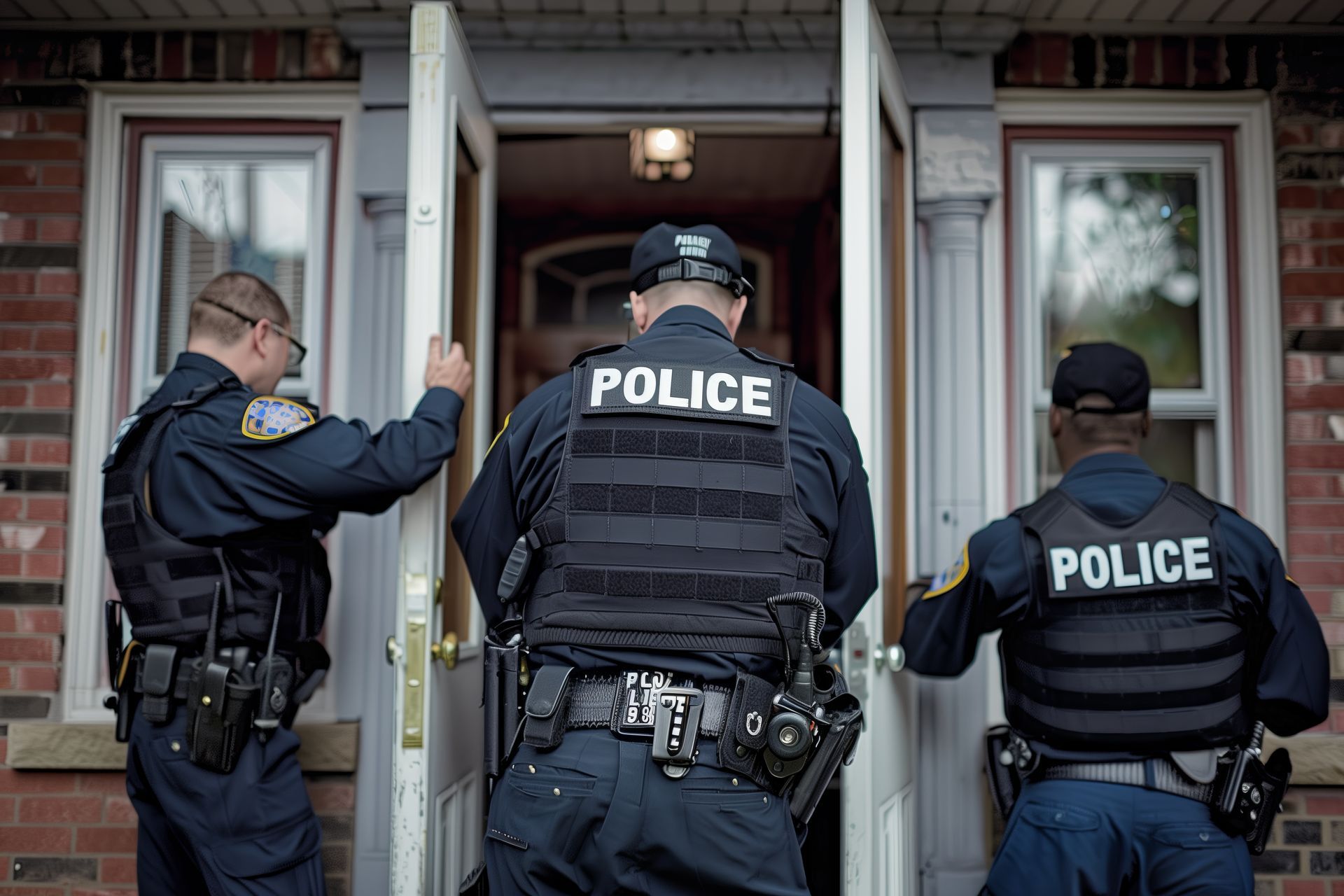
Search warrants must meet strict constitutional and procedural standards. If those standards are not met, a judge may suppress the evidence obtained during the search, which means the prosecution cannot use it in court.
Whether suppression is possible in your case depends on the facts of the investigation, the information presented to the judge who issued the warrant, and how officers carried out the search.
The Legal Standard for Search Warrants in Arizona
Under the Fourth Amendment, search warrants must be supported by probable cause. The application must show a reasonable basis to believe that evidence of a crime will be found in a specific place.
Once law enforcement thinks they have a reasonable basis, they must submit an affidavit to a judge or magistrate that:
- Describes the place to be searched
- Identifies the evidence officers expect to find
- Provides factual support for probable cause
If the affidavit does not establish probable cause or the warrant fails to meet these requirements, the defense may challenge the evidence obtained from the search.
When a Search Warrant Affidavit Lacks Probable Cause
A warrant affidavit must contain specific facts linking criminal activity to the location being searched. If it was approved based on vague suspicions or unsupported conclusions, it could potentially be challenged.
Examples of Weak Probable Cause That Could Be Challenged
- An affidavit that simply states a person is “involved in drug activity” but provides little or no factual detail explaining how investigators reached that conclusion
- Tips from anonymous sources without information showing the tip is reliable
- A lack of connection between the alleged crime and the place being searched
In many cases, probable cause challenges arise from insufficient detail or overly broad assumptions, not necessarily from intentional misconduct.
Scenarios That May Make Warrant Affidavits Challengeable After a Search
Unintentional Mistakes
- Misstating a date, address, or surveillance observation
- Misinterpreting information received from another officer or agency
These types of errors can occur in complex investigations and do not automatically invalidate a warrant unless the mistake affected probable cause.
Overstated Evidence
- Describing suspicious behavior as definitive proof of criminal activity
- Presenting an informant’s speculation as a confirmed observation
In some situations, investigators may believe strongly that a suspect possesses evidence but lack direct proof. When affidavits present assumptions or inferences as stronger evidence than they actually are, the defense may argue that the judge was misled.
Intentional or Reckless Misrepresentations
These situations are less common but are taken seriously by courts. They may involve knowingly false statements or the omission of information that would undermine probable cause.
When the defense raises this issue, the court may hold what is known as a Franks hearing to determine whether the affidavit contained materially false or misleading information.
When Information in the Affidavit Is Too Old
Probable cause must be based on reasonably current information. For example, if an affidavit relies on an informant’s claim that drugs were seen inside a home several months earlier, the defense may argue that the information was too outdated to establish probable cause when the warrant was issued.
When courts review these challenges, they may consider factors such as:
- The type of alleged crime
- Whether the activity appears ongoing
- Whether the evidence is something likely to remain in place over time
When the Warrant Is Too Broad
Search warrants must be specific about what officers are allowed to search and seize.
This requirement is known as the particularity requirement of the Fourth Amendment.
Problems can arise when warrants authorize searches that are too broad or vague. For example:
- A warrant authorizing the seizure of “any evidence of criminal activity”
- A warrant that fails to clearly identify the location or property to be searched
Courts generally require warrants to identify particular categories of evidence, such as financial records, digital devices, or controlled substances connected to a specific offense.
When Police Exceed the Scope of the Warrant
Even when a warrant is valid, officers must stay within the limits authorized by the judge. A search can potentially be challenged if officers:
- Search areas not reasonably capable of containing the items listed in the warrant
- Seize property unrelated to the investigation
- Continue searching after locating the items specified in the warrant
For example, a warrant allowing officers to search for firearms may not justify opening small containers that could not possibly contain firearms. Evidence discovered during a search that exceeds the warrant’s scope, such as drugs found in a place not authorized by the warrant, may be suppressible.
When the Warrant Was Improperly Executed
Arizona law and court rules also regulate how search warrants must be carried out. Execution issues may arise if:
- Officers execute the warrant outside the timeframe authorized by the court
- Notice requirements are not followed
- Property is searched before the warrant is formally issued
While minor procedural errors may not always invalidate a search, more serious violations can become grounds for suppression.
A Phoenix Criminal Defense Attorney Can Evaluate Whether Evidence Should Be Suppressed
If you are facing charges connected to evidence obtained through a search warrant, it may be in your best interest to have an experienced Phoenix criminal defense attorney review the warrant and the circumstances surrounding the search.
If suppressible evidence exists in your case, Arizona board-certified criminal specialist Michael Alarid III will work tirelessly to find it. Call (602) 818-3110 for a free case evaluation.
Practice Areas
RECENT NEWS