Can Police Keep Questioning You After You Say You Don’t Want to Talk?
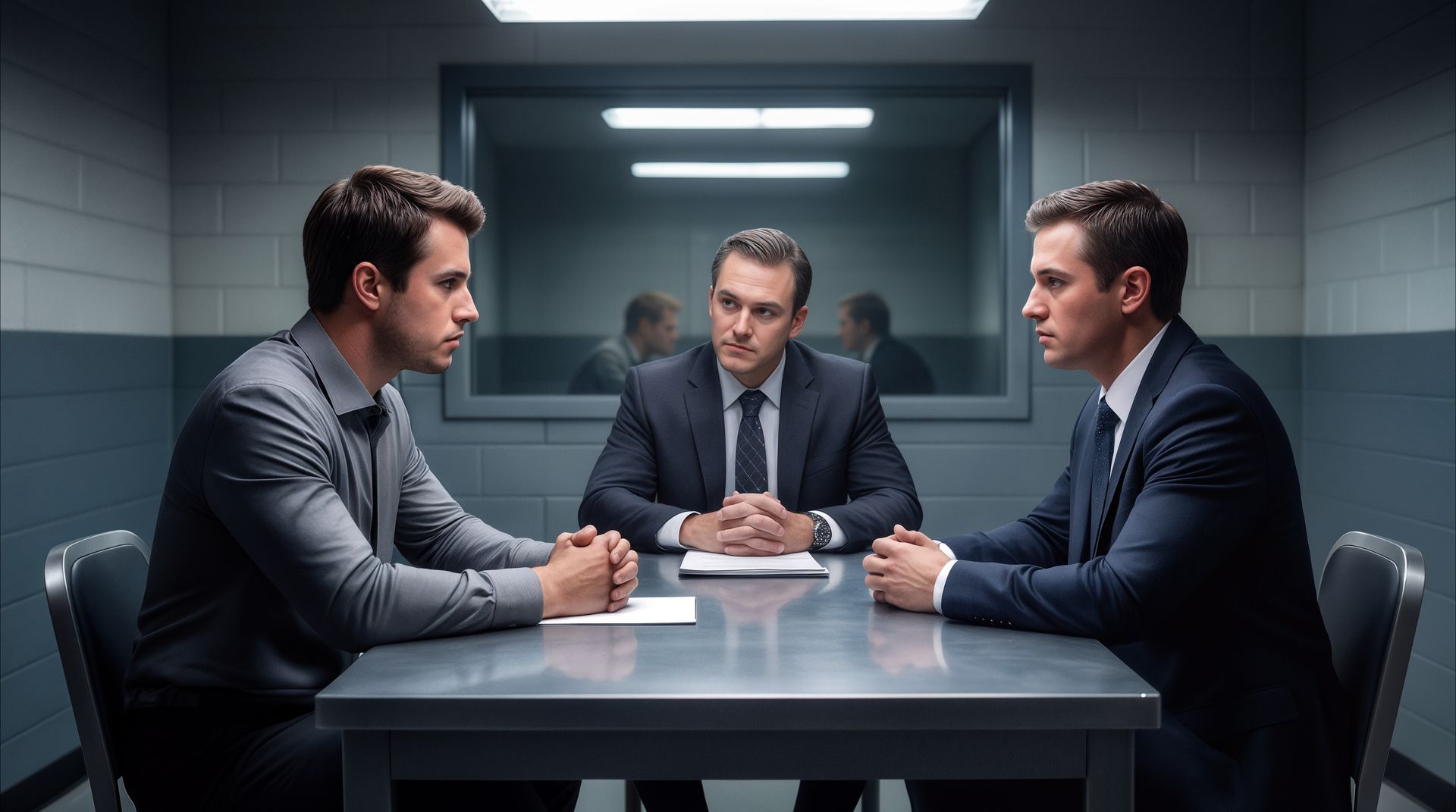
Generally, no. If you are in custody and clearly tell police that you do not want to answer questions, officers are generally required to stop the interrogation.
The key issue is whether you clearly invoked your right to remain silent. Courts can distinguish between an unambiguous refusal to continue questioning and a statement that sounds hesitant, temporary, or limited to a particular topic.
That distinction can determine whether statements made later are admissible in court.
What Counts as Invoking Your Right to Remain Silent?
You do not need to use a specific legal phrase to invoke your right to remain silent.
Statements such as “I don’t want to answer any more questions” or “I don’t want to talk right now” may be clear enough to require police to stop questioning. If the admissibility of those statements is disputed later, courts look closely at the exact words the defendant used and the circumstances surrounding the interrogation.
A recent appellate case, State v. Diliz, illustrates how that analysis works. The Arizona Court of Appeals reviewed a hospital interrogation in which the defendant told a detective, “I don’t wanna be questioned about anything right now.” The court found that statement was an unequivocal invocation of his right to remain silent.
The detective nevertheless continued the interaction, and statements obtained afterward were later admitted at trial. The appellate court ruled that those statements should have been suppressed, vacated all 11 felony convictions and sentences, and ordered a new trial.
Less direct statements can create more uncertainty. Saying that you would rather not answer one question, asking to change the subject, or sounding unsure about whether you want to continue may not always be treated as a complete invocation.
Clarity matters because officers are not necessarily required to guess whether someone intends to stop the interrogation.
What Must Police Do After You Clearly Invoke?
Once a person clearly invokes the right to remain silent, police must “scrupulously honor” that decision.
That generally means they cannot simply continue asking questions in the same way or pressure the person into changing their mind.
In Diliz, the detective acknowledged that the defendant did not want to answer questions but continued the interaction in a way the appellate court concluded was designed to encourage him to reconsider. The court found that the resulting statements should have been suppressed.
The important issue is what happens after the invocation. A short pause followed by continued questioning may not be enough if the officer is still trying to obtain answers.
Can Police Ever Start Questioning You Again?
Yes, under some circumstances.
A suspect may later decide to restart the conversation voluntarily. Police may also be able to resume questioning after a sufficient break, depending on what happened in between and whether proper Miranda warnings are given again.
When disputes arise regarding the resumption of questioning, courts often examine:
- Who restarted the conversation
- How much time passed
- Whether the suspect received fresh Miranda warnings
- Whether the suspect voluntarily agreed to continue
- Whether police respected the earlier invocation
The central question is whether the decision to speak again was voluntary rather than the result of officers ignoring the earlier refusal.
What Happens If Police Keep Questioning Anyway?
A defense attorney may ask the court to suppress statements obtained after a violation of the right to remain silent.
If the judge agrees, prosecutors may be prohibited from using those statements in their case.
The effect can vary. If the statements were relatively unimportant, the prosecution may still have enough other evidence to continue. If the statements played a significant role in the case, suppression may substantially weaken the prosecution’s position.
Why the Exact Words and Recording Matter in Arizona Criminal Cases
Cases involving an invocation of the right to remain silent often turn on the exact words used and what police did next.
A criminal defense attorney may be able to review body camera footage, interview-room recordings, hospital recordings, and written reports to determine whether statements may have been obtained improperly and whether a motion to suppress should be filed.
If you are facing criminal charges in Phoenix and believe police continued questioning after you said you did not want to talk, call Arizona Board-Certified Criminal Defense Specialist Michael Alarid III at (602) 818-3110 for a free case evaluation.
Practice Areas
RECENT NEWS