Can You Be Convicted in Arizona Without Physical Evidence?
Yes. A criminal conviction in Arizona does not necessarily require DNA, fingerprints, video footage, photographs, or other physical evidence. Witness testimony can potentially be enough.
In some cases, the prosecution does rely heavily on the testimony of one person, often the alleged victim. Arizona courts have held that uncorroborated testimony can be sufficient to support a conviction if a jury finds the testimony credible.
That does not mean an accusation without any other physical evidence automatically leads to a conviction. The prosecution still has to prove every element of the charged offense beyond a reasonable doubt.
What Counts as Evidence in an Arizona Criminal Case?
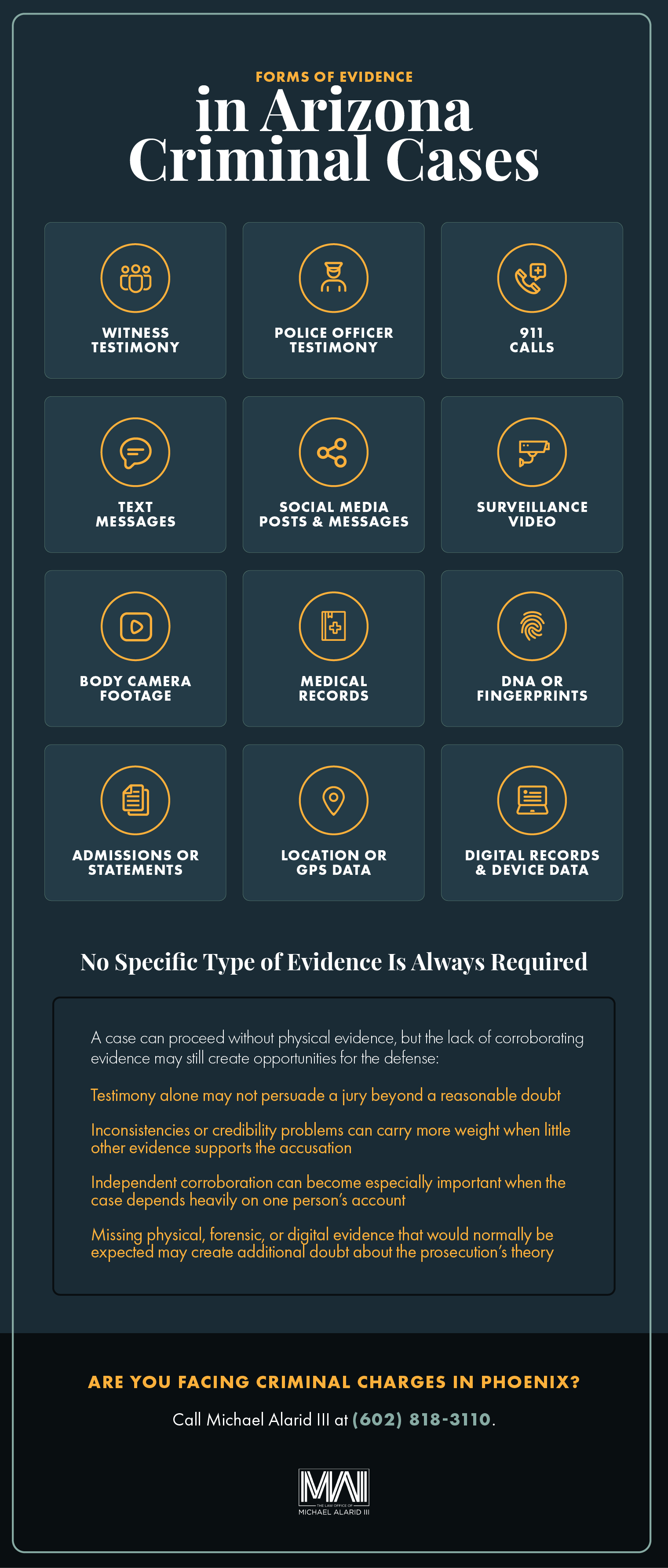
Depending on the allegations, prosecutors may rely on:
- Witness testimony
- Statements made by the defendant
- Text messages, emails, or social media messages
- 911 calls
- Surveillance or body camera footage
- Medical records
- Phone or location data
- DNA, fingerprints, weapons, or other physical evidence
- Circumstantial evidence
A case with no DNA, fingerprints, or other traditional physical or forensic evidence is not necessarily a case with "no evidence."
Can One Person's Testimony Be Enough for a Conviction?
Potentially.
Arizona courts have recognized that a conviction can, in some circumstances, rest on the testimony of a single alleged victim without independent physical evidence. For example, Arizona appellate courts have repeatedly applied this rule in sexual offense cases.
Whether testimony is legally capable of supporting a conviction is different from whether a jury will find it persuasive beyond a reasonable doubt.
Jurors can consider whether a witness's account is consistent, whether it makes sense in light of the surrounding circumstances, and whether other evidence supports or contradicts important portions of the story.
How Does Other Evidence Affect a Case Based Primarily on Testimony?
When physical evidence is limited or nonexistent, other evidence can become particularly important.
A witness's account may be strengthened by independent information that is consistent with it. Examples could include a 911 call made immediately after an incident, text messages discussing what happened, another witness who saw part of the event, medical treatment consistent with the allegation, or phone records supporting the reported timeline.
Other evidence may raise questions instead.
A witness may give materially different versions of what occurred, describe events that conflict with surveillance footage or phone records, or provide a timeline that does not fit other documented information. Earlier statements can be especially important when they differ from later testimony.
Although it is possible for someone to be convicted on testimony alone, the absence of physical or forensic evidence can matter. For example, if the allegations would reasonably be expected to produce specific types of physical, digital, or documentary evidence and none exists, the defense may examine why.
Why the Type of Criminal Charge Matters
Cases without substantial physical evidence are more common with some allegations than others.
Domestic violence or assault cases may begin with statements from the people involved after police arrive. Threatening or harassment allegations may depend heavily on testimony, calls, or electronic communications.
Sex crime cases may sometimes proceed without eyewitnesses, usable DNA, or documented injuries, leaving the alleged victim's account as a central part of the prosecution's case.
The presence or absence of physical evidence matters less than the strength of the admissible evidence as a whole and whether it proves the charged offense beyond a reasonable doubt.
How Does a Defense Attorney Evaluate a Case Without Physical Evidence?
When a case depends heavily on one person's account, a defense attorney can examine that account against every other available source of information.
That may include:
- Comparing police interviews, body camera recordings, 911 calls, and later testimony
- Reviewing texts and phone records
- Establishing a detailed timeline
- Interviewing other witnesses
- Determining whether investigators failed to obtain or test potentially important physical, digital, or forensic evidence
Small discrepancies do not necessarily undermine a witness's credibility, but significant contradictions involving when, where, or how an alleged offense occurred may deserve closer scrutiny.
If you are facing criminal charges in Phoenix, the Law Office of Michael Alarid III can review the evidence against you and identify weaknesses, inconsistencies, or other issues that may be relevant to your defense. Call (602) 818-3110 to schedule a free case evaluation.
Practice Areas
RECENT NEWS