What Happens When Body Camera Footage Contradicts a Police Report?
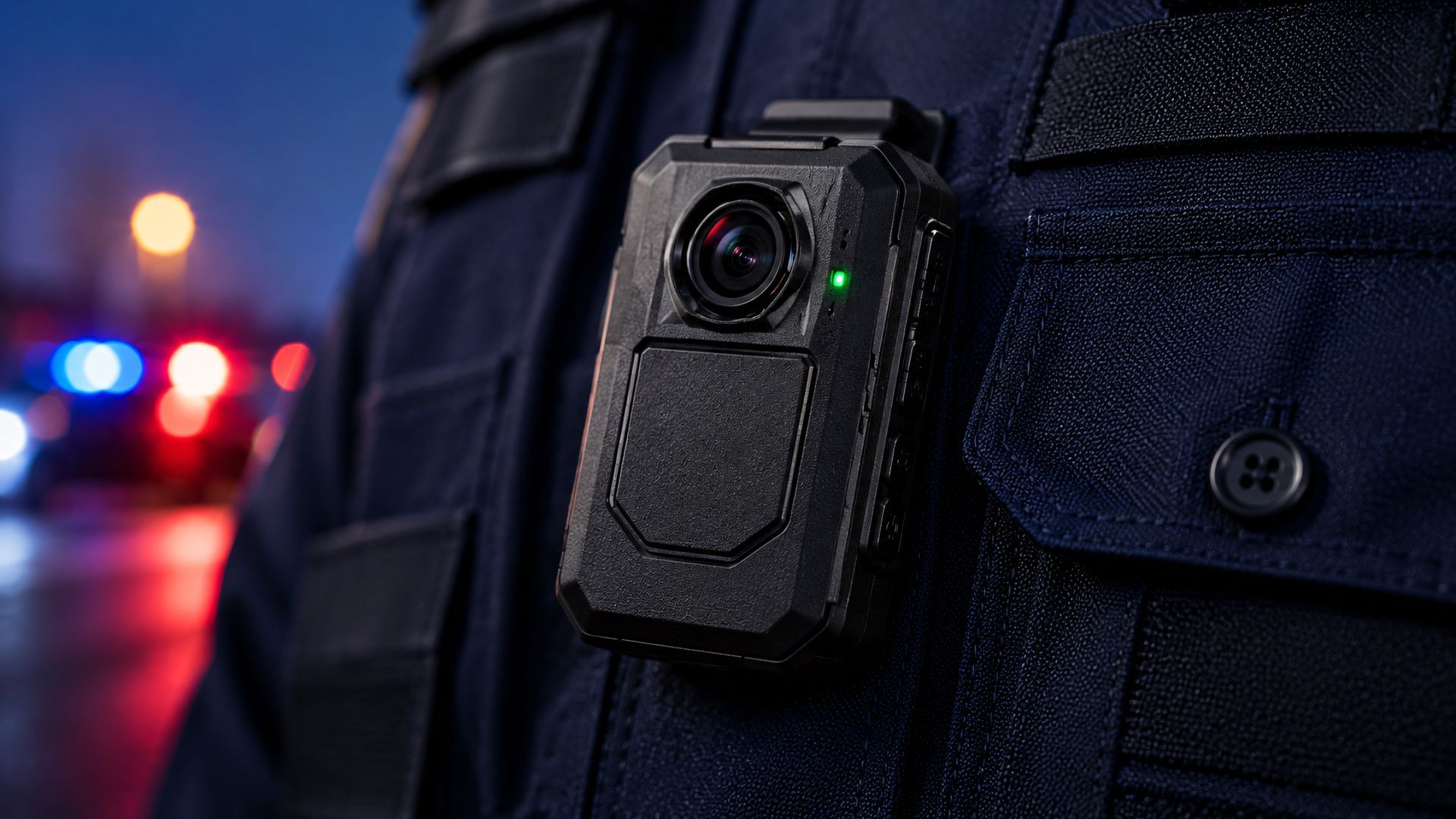
When body camera footage contradicts a police report on an important fact, the discrepancy could potentially affect:
- The officer’s credibility
- The legality of a search or arrest
- Plea negotiations
- How the case is presented at trial
The significance depends on what the footage shows, how important the disputed fact is to the case, and whether the discrepancy appears to be an understandable mistake or raises broader questions about the accuracy of the officer’s account.
Why Police Reports and Body Camera Footage May Differ
Police reports are typically written after an incident and rely partly on the officer’s recollection of what occurred. Human memory is imperfect, particularly during stressful, chaotic, or fast-moving encounters.
Reports may also summarize statements rather than quote them word for word. An officer may focus on details that seemed important to them in the moment while overlooking something that becomes significant later.
Body cameras have limitations of their own. The camera may point in a different direction from where the officer is looking, audio may be difficult to hear, and important events can occur outside the frame.
These limitations make it important to consider both the footage and the surrounding evidence rather than assuming either source provides a complete account.
What Types of Contradictions Can Matter?
Some discrepancies are far more significant than others.
For example, a police report might state that a defendant immediately became aggressive, while the video shows several minutes of calm interaction before the encounter escalated.
Other potentially important discrepancies include:
- A report states that repeated commands were ignored, but the footage shows fewer commands, unclear instructions, or very little time to comply
- An officer describes a statement as an admission, while the recorded wording is more ambiguous
- A DUI report describes slurred speech, poor balance, or obvious impairment that is difficult to observe on the footage
- A report states that someone voluntarily consented to a search, while the recording raises questions about what was actually said or agreed to
- The written description of resistance or physical movement differs from what appears on camera
- A witness’s statement is summarized differently in the report than it was given on video
- The sequence of events in the report does not match timestamps or the recorded timeline
A minor wording difference may not matter much, while a contradiction involving probable cause, consent, an alleged admission, or the conduct underlying the charge may have much greater significance.
Does Body Camera Footage Automatically Override the Police Report?
No. Video evidence still has to be evaluated in context.
A camera can miss something the officer saw, fail to capture an event occurring outside the frame, or produce unclear audio. In other situations, the video may support most of the report while contradicting one specific detail.
The meaning of the footage may also be disputed. Prosecutors, defense attorneys, witnesses, and jurors can sometimes reach different conclusions after watching the same recording.
How Can a Contradiction Affect a Criminal Case?
If an officer’s report describes facts used to justify a search or arrest and the footage does not support that description, a defense attorney may examine whether reasonable suspicion, probable cause, or consent actually existed.
Body camera footage can also be used to challenge an officer’s testimony. If an officer gives one version of events in a report or in court and the recording shows something materially different, the defense may use that inconsistency when questioning the officer’s credibility.
For example, in DUI cases, footage may be compared with written descriptions of driving behavior, speech, balance, field sobriety testing, and other alleged signs of impairment.
Prosecutors may evaluate a case differently if a significant discrepancy creates questions about the police account, which could potentially influence plea negotiations.
Why Defense Attorneys Review Dash and Body Camera Footage
A criminal defense attorney should evaluate the underlying evidence rather than relying exclusively on how an incident was summarized in a police report. That review may include:
- Comparing the report with the footage
- Reviewing timestamps and the sequence of events
- Comparing recorded statements with how they were summarized
- Looking for important details omitted from the written report
- Comparing footage from multiple officers
- Reviewing dispatch audio, 911 calls, surveillance footage, and witness statements alongside the dash or body camera recording
The goal is to determine whether any discrepancy affects a fact that matters to the prosecution’s case.
Body camera footage does not automatically prove that a police report is inaccurate, and a difference between the two does not necessarily invalidate the charges. However, when the recording contradicts an officer’s written account on a legally significant issue, that difference may become an important part of the defense.
If you are facing criminal charges in Phoenix, the Law Office of Michael Alarid III can review police reports, body camera footage, and other evidence to identify inconsistencies or legal issues that may affect your case. Call (602) 818-3110 to schedule a free case evaluation.
Practice Areas
RECENT NEWS